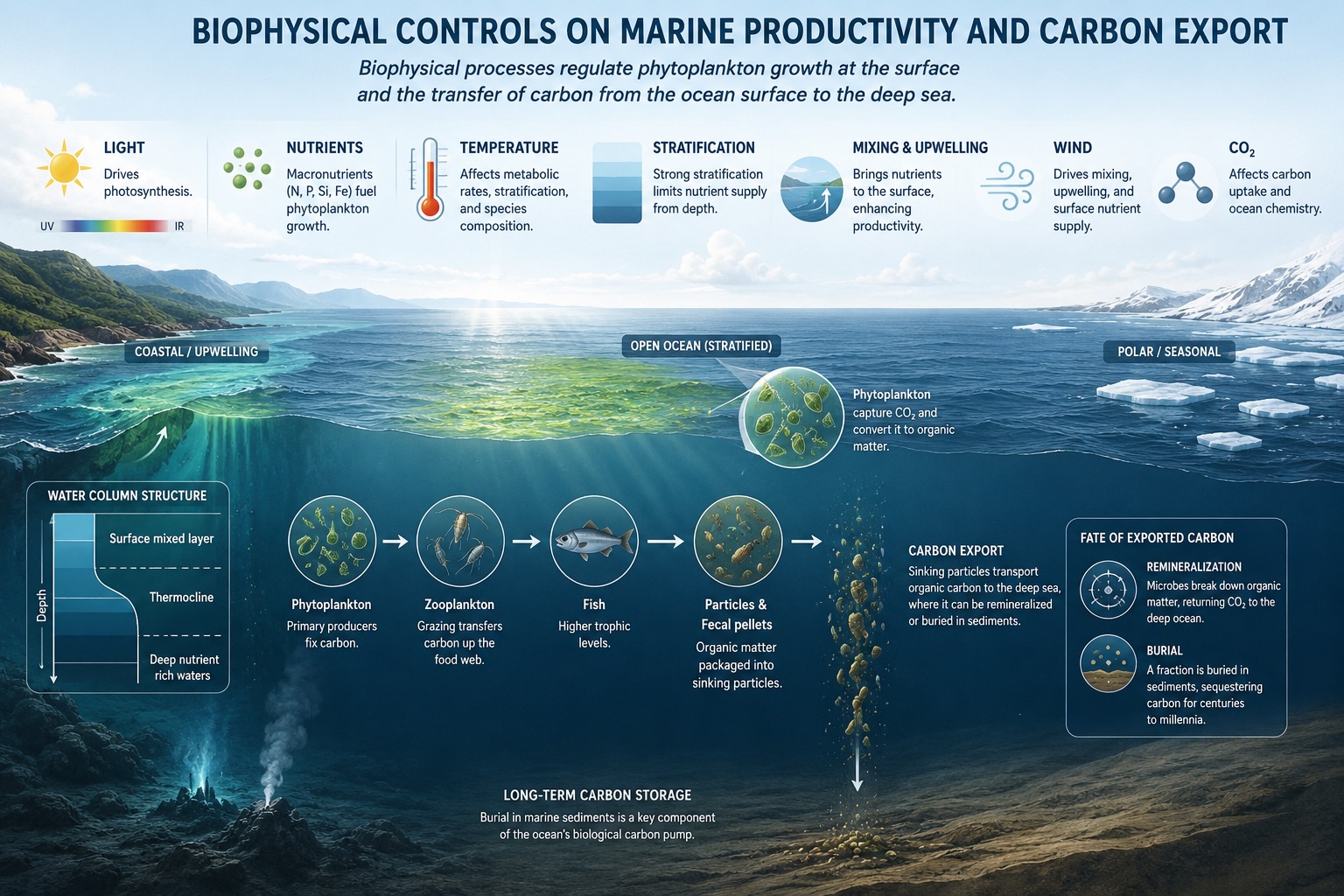
Biophysical Controls on Marine Productivity and Carbon Export
Ocean physics fundamentally controls where and when marine ecosystems transfer carbon to depth. This research uses autonomous platforms to observe how mixed layer dynamics, stratification, deep convection and mesoscale eddies regulate phytoplankton growth and the formation of sinking particles. By capturing processes across timescales from hours to seasons, this work reveals the mechanisms linking physical forcing to carbon export efficiency in different ocean regimes.
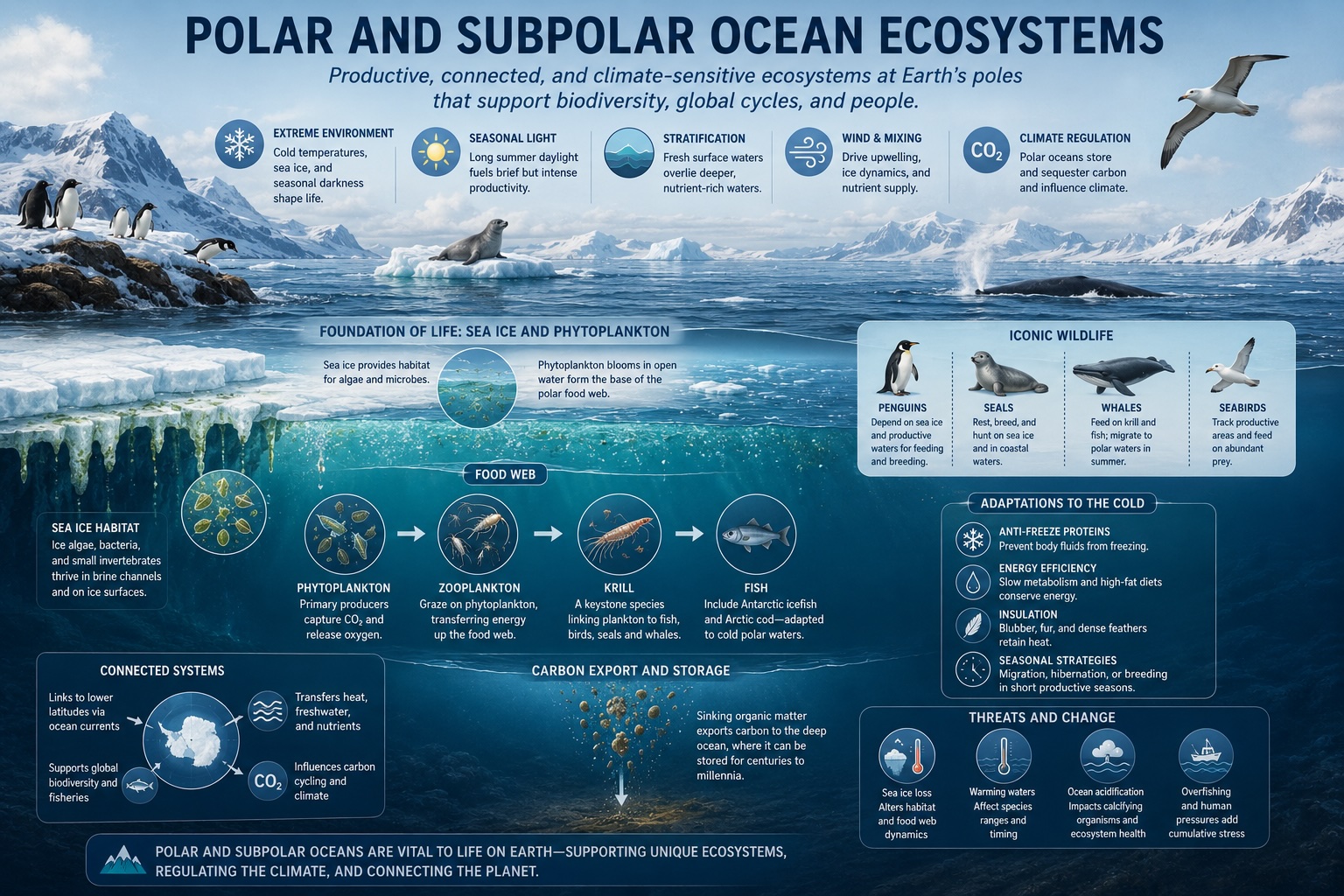
Polar and Subpolar Ocean Ecosystems
High-latitude oceans exhibit extreme seasonal cycles in mixing, light and temperature that generate intense but ephemeral productivity with disproportionate influence on global carbon storage. Research in these environments examines how winter convection, spring restratification, glacier–ocean interactions and ongoing climate change shape ecosystem structure and particle export pathways. These regions serve as natural laboratories where physical controls on biological processes become particularly visible and where climate-driven changes may fundamentally alter carbon cycling.
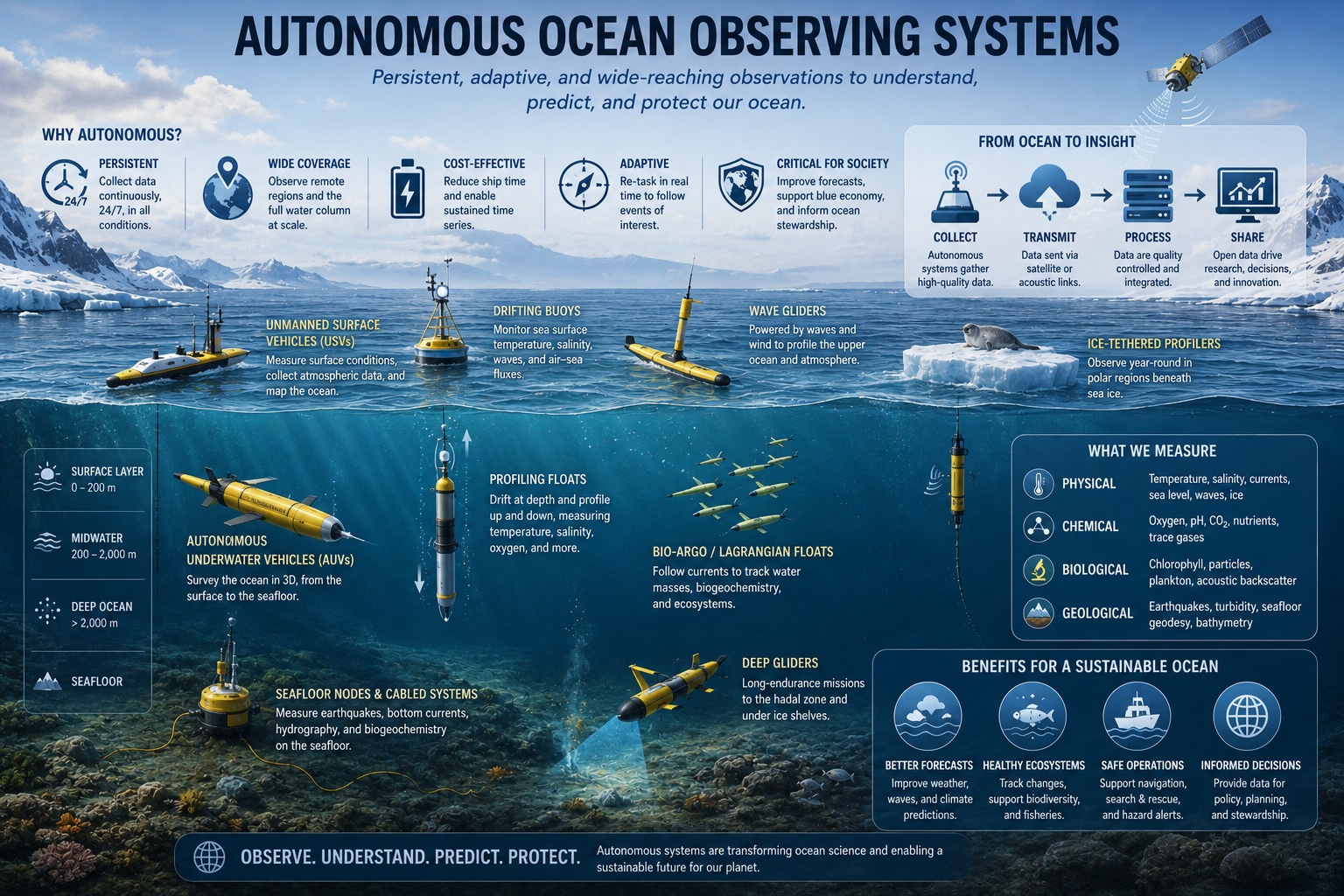
Autonomous Ocean Observing Systems
Sustained ocean observation requires platforms that operate continuously through seasons and weather conditions inaccessible to research vessels. This research develops glider-based observing strategies that capture episodic events, resolve sub-seasonal variability and extend measurements into under-sampled regions. Work includes integrating biogeochemical sensors for real-time ecosystem monitoring, refining data processing pipelines for quality and interoperability, and demonstrating how marine robotics can address questions requiring persistent ocean presence.
Current projects: GLIDERS I, GLIDERS II, APART
Past projects: TechOceanS, FIRe-Glider